China’s compact-powder suppliers serve buyers seeking dependable formulas, precise color matching, and production that scales. Yet a polished sample is only the beginning. Buyers also need to assess powder texture, pan fit, packaging quality, and how each batch performs under real shipping and storage conditions.
McKinsey & Company’s 2023 beauty-market report estimated global beauty sales at about $430 billion in 2022, with further growth expected. That figure covers beauty broadly, not compact powder alone. It still signals why supplier evaluation matters. Cosmetic chemist Perry Romanowski has written about the importance of product formulation and testing. Paraphrasing that practical principle: “A compact powder must perform consistently, not just look refined in the pan.” Treat this as a summary, not a verbatim quotation.
This guide compares compact powder manufacturers in China through buyer-focused criteria: formulation capabilities, quality controls, customization, communication, and export experience. Ask for current test documentation and production samples. Check whether the shade remains even after repeated use, and whether the compact closes securely after handling. Details matter. A sample may feel silky, while a larger production run reveals uneven pressing or color variation. No supplier should be judged by a brochure alone. The right choice depends on your market, target price, and quality requirements—and sometimes the best-looking option is not the most dependable one.
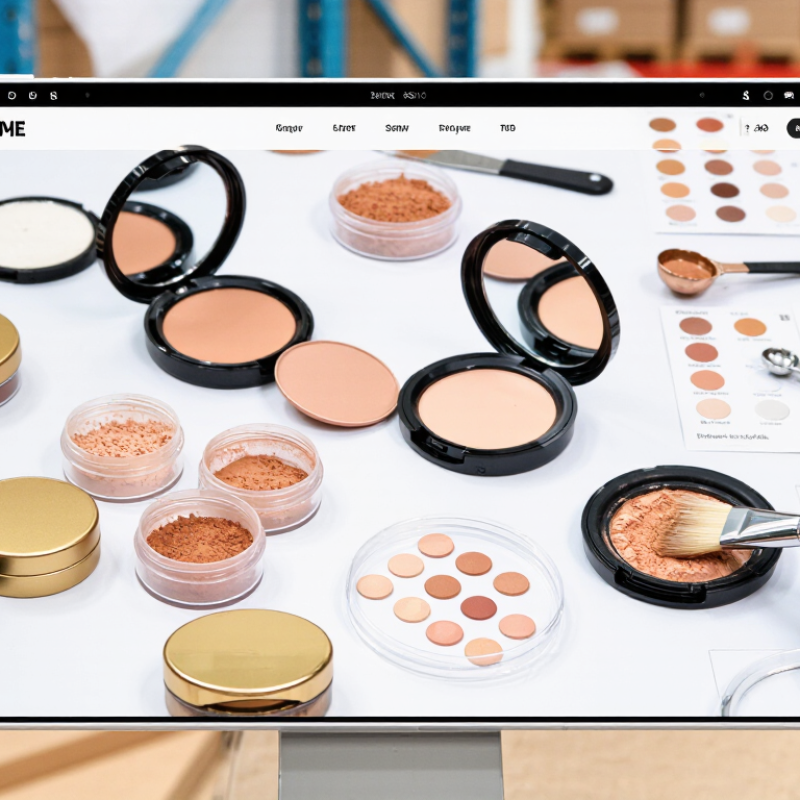
Compact powder is a dry cosmetic pressed into a metal pan or molded compact. Its feel depends on more than pigment. Talc or alternative fillers, binders, and oils influence payoff, slip, and how easily the powder breaks. A matte formula may feel drier, while a softer finish can need careful oil balance. Small details matter.
Manufacturing typically involves weighing and blending ingredients, checking color, then pressing the mixture at a controlled pressure. Too little pressure can leave a fragile cake; too much may make pickup difficult. A practical supplier should track batch records and check shade consistency, pan adhesion, and breakage after handling tests. Ask for samples from production-scale batches, not only lab samples. They can behave differently. Color matching can still drift between batches, so agreed shade limits and retained reference samples help buyers assess consistency. Packaging fit matters, too: a compact that looks neat on a bench may loosen after repeated opening. The process is rarely flawless, and clear records make problems easier to investigate.
Assess a Chinese compact powder manufacturer on its process, not its showroom. Ask to observe powder blending, pressing, filling, and pan assembly. Check whether operators record batch numbers and retain samples from each production run. Small details matter.
Request shade-match records, ingredient specifications, stability results, and packaging compatibility tests. A compact can look perfect at dispatch, then crack after repeated drops or soften in humid storage. Test samples under your own transport conditions.
Cosmetics Europe’s 2024 market report recorded €96 billion in European cosmetics and personal care retail sales for 2023. That broad market figure is not compact-powder demand, but it signals the scale of quality expectations among export buyers.
Ask how the factory manages those expectations: written procedures aligned with ISO 22716 good manufacturing practices are useful evidence, not a guarantee. Review recent audit findings and corrective actions, too. A polished certificate is not the whole story. A short pilot run can reveal uneven pan fill, loose hinges, or shade drift that a presentation sample may hide. Manufacturers should explain limits plainly; some answers will still need verification.
China’s leading compact powder manufacturers are best compared by formulation control, pressing consistency, and export documentation. The National Bureau of Statistics reported that China’s cosmetics retail sales reached RMB 435.8 billion in 2024, up 2.8% year on year. This market scale supports a broad supplier base, but it does not guarantee reliable factory performance.
Established manufacturers typically offer OEM and ODM services, from shade matching to compact case selection. Stronger profiles show in-house testing, documented batch traceability, and clear capacity for repeat production. Ask how each factory controls powder hardness, pan adhesion, and fallout after transport. These details matter. A neat catalog is not proof of a stable batch.
For global buyers, request recent test records, quality-system documentation, and samples from the same production line intended for bulk orders. Review packaging fit closely: a loose hinge or weak mirror adhesive can undermine an otherwise good formula. Some supplier profiles look impressive on paper, yet disclose little about rejection rates or corrective actions. That gap deserves follow-up. Compare the evidence, not just the quoted price.
This chart shows a typical compact powder production workflow, from incoming material inspection to packaging. The numbers indicate step order only—not factory performance, capacity, or a ranking of manufacturers. Processes may vary by product and supplier.
For global buyers, compact powder sourcing is not just a price comparison. McKinsey’s 2023 State of Beauty report projected the global beauty market could reach $580 billion by 2027, with about 6% annual growth. That outlook raises the stakes for reliable production. In OEM projects, buyers provide the formula or specifications; ODM suppliers develop more of the product, often including texture and packaging. Clarify who owns formula changes and approves each production sample. A polished sample can still mislead.
Compare quality controls with real batch records, not broad promises. Ask how the factory checks shade consistency, powder adhesion, breakage after drops, and stability under heat. Request test methods and traceability documents. Small details matter. Grand View Research estimated the global cosmetics market at $343.37 billion in 2024, using a broader category scope than some beauty forecasts; its report projected 5.3% annual growth through 2030. The figures are not directly comparable, but both point to sustained demand.
Compliance capability should be specific to the destination market. Review ingredient lists, safety documentation, packaging claims, and change-control procedures before production. Ask for recent audit evidence and a sample technical file, then verify that records match the factory and product being quoted. A factory visit helps, but it is not proof by itself. I would also check how the supplier handles a failed test; that conversation can reveal gaps that a sales presentation misses.
| Evaluation Dimension | What Buyers Should Compare | Evidence to Request | Buyer Considerations |
|---|---|---|---|
| OEM service | The buyer supplies or specifies the formula, shade range, packaging, and product requirements; the manufacturer produces to the agreed specification. | Signed product specification, formula or development brief, approved reference sample, manufacturing agreement, and documented change-control process. | Clarify who owns the formula, whether the manufacturer may use it for other customers, and how formula or component changes are approved. |
| ODM service | The manufacturer offers existing or manufacturer-developed formulas and product concepts that can be adapted for the buyer’s target market. | Formula options, shade samples, ingredient list, customization scope, development charges, and written terms covering formula rights and exclusivity. | “ODM” does not automatically mean exclusive ownership. Confirm which ingredients, shades, claims, and packaging can be customized. |
| Minimum order quantity | Minimums for formula development, each shade, compact components, decoration, and finished goods. | A written quotation showing separate minimums for stock and custom packaging, tooling, color matching, and repeat orders. | There is no universal MOQ for compact powder. It varies with formula, shade count, component availability, decoration, and production setup. |
| Formula and shade development | Ability to develop or adapt pressed-powder formulas and provide repeatable shade matching across production batches. | Ingredient list, sample approval records, shade references, test-batch results, and documented procedures for matching approved standards. | Assess coverage, finish, payoff, wear, fragrance, and suitability for the intended market through agreed samples and testing. |
| Packaging and compatibility | Fit between powder pan, compact case, hinge, mirror, applicator, and any insert or refill system. | Component specifications, compatibility or assembly checks, approved packaging samples, and records of transport or drop testing where applicable. | Confirm whether packaging is supplied by the manufacturer or sourced separately, and who is responsible for component defects and tooling. |
| Quality management | Documented controls for incoming materials, production, in-process checks, finished-product release, and batch traceability. | Current quality-system certificates where held, audit information, batch records, inspection criteria, complaint procedures, and a sample batch COA. | Verify certificate scope, issuing body, site address, validity, and whether the certificate covers the actual manufacturing location and relevant activities. |
| Cosmetics GMP | Manufacturing practices relevant to cosmetic production, including hygiene, personnel, premises, documentation, and production controls. | GMP certificate or audit evidence and procedures aligned with ISO 22716:2007, the international guideline for good manufacturing practices for cosmetics. | Request evidence for the specific site producing the order; a certificate or audit document should be independently checked for scope and validity. |
| Product testing | Risk-based testing for the formula and intended markets, which may include microbiological quality, stability, packaging compatibility, and selected contaminant tests. | Test methods, laboratory reports, sample and batch identification, acceptance criteria, and the name and accreditation scope of any external laboratory. | Testing needs depend on product composition, use, claims, and destination-market rules. Do not assume one test panel or limit applies worldwide. |
| European Union compliance | Support for requirements under Regulation (EC) No 1223/2009, including safety assessment and product information obligations before placing a cosmetic product on the EU market. | Ingredient and raw-material information, relevant safety and test data, manufacturing details, and documents needed by the responsible person and safety assessor. | Manufacturing capability alone does not establish EU compliance. The responsible person must ensure applicable product obligations are met before sale. |
| United States compliance | Support for applicable U.S. cosmetic requirements, including MoCRA obligations and relevant labeling rules. | Facility and product information needed by the responsible party, ingredient data, safety substantiation support, and compliant label artwork for review. | FDA generally does not pre-approve cosmetic products or facilities, except for applicable color-additive requirements. Confirm who handles each MoCRA obligation and any exemptions. |
| China-market requirements | Understanding of applicable NMPA registration or filing requirements for the product category and the information required for the intended China-market route. | Product-category assessment, ingredient information, supporting safety data, and a clear allocation of responsibilities for registration or filing. | Requirements depend on product classification and market route. Confirm the current rules and responsible parties for the specific product before launch. |
| Export documentation and traceability | Ability to provide consistent product, shipment, and batch documents for the buyer’s import and distribution process. | Commercial invoice, packing list, batch identification, product specifications, country-of-origin information, and other documents agreed for the destination market. | Document requirements vary by destination and importer. Agree on document format, approval timing, and record-retention responsibilities before production. |
| Commercial terms and delivery | Clarity on sampling, production scheduling, payment terms, Incoterms, capacity allocation, and procedures for delays or rejected goods. | Detailed quotation, production milestones, approved sample reference, packaging and freight assumptions, and written quality-claim terms. | Lead time is not universal; confirm it for the exact formula, shade count, components, order quantity, and shipping arrangement. |
| Comparison note: This is a supplier-evaluation framework, not an audited ranking or a claim about any specific manufacturer. Request current, site-specific evidence and independently verify certificates, test reports, regulatory responsibilities, and commercial terms before placing an order. | |||
Global buyers assessing compact powder manufacturers in China should look beyond the quoted unit price. A low offer can hide costs in custom pans, shade matching, or protective inserts. Request samples made through the process intended for regular orders, not only polished showroom pieces. Check powder pickup, fallout, closure fit, and how the compact holds up in a simple drop test. Small details matter.
Supplier capability is best judged through records and repeatability. Ask for a specification sheet covering powder weight, pan dimensions, finish options, and packaging tolerances. Confirm how materials and finished batches are checked, and request relevant quality documents. For overseas shipments, discuss carton strength, labeling files, lead times, and artwork approvals. A video call through the packing area can show the workflow, though it cannot replace an audit.
Communication deserves equal attention. Send a concise brief with target shades, order volume, destination, and launch dates; then compare how precisely each supplier responds. Clarify sample charges, tooling ownership, change control, and defect remedies in writing. Ask for a pilot run before placing a large order. That takes time. Yet buyers sometimes overlook a small specification when samples look attractive. The process is not always tidy, so keep dated approvals and retain reference samples.
It is pressed dry cosmetic powder in a metal pan or molded case. Fillers, binders, and oils affect its feel and pickup.
A matte formula may feel drier. Oil balance and filler choices can change slip, payoff, and how easily the cake breaks.
Ingredients are weighed and blended, color is checked, and the mixture is pressed. Pressure needs careful control.
Ask for checks on shade consistency, powder hardness, pan adhesion, and breakage after handling. Batch records also help trace problems.
Not always. Request samples from production-scale batches, since they may behave differently from lab samples.
Agree on shade limits and keep reference samples. Color can still drift, so comparisons need clear standards.
Open and close the compact repeatedly. Check the hinge, mirror adhesive, and whether the pan stays secure.
Review test records, quality-system documents, and repeat-production capacity. A polished catalog alone proves little.
They can reveal how a factory handles defects. Some profiles leave gaps here, and that deserves follow-up.
This article explains what Compact Powder products are and how manufacturing choices affect texture, coverage, finish, packaging, and consistency. It outlines practical ways to evaluate Chinese manufacturers, including production experience, equipment, quality-control processes, communication, sample development, and capacity to support repeat orders. Readers will also find an overview of the types of suppliers available in China and the capabilities they may offer, without relying on brand names.
The guide compares OEM and ODM services, highlights the importance of product testing, documentation, and market-specific compliance, and helps global buyers assess suppliers more systematically. By defining product requirements, checking manufacturing and quality systems, reviewing samples, and discussing timelines and order quantities, buyers can make a clearer sourcing decision. The goal is to help businesses identify a reliable Compact Powder supplier whose capabilities, quality expectations, and service model fit their needs.