0%

Finding the best Face Powder suppliers in China takes more than comparing prices. A smooth compact in a product photo cannot reveal how evenly its powder presses, how reliably shades match, or whether the supplier can repeat a batch. Buyers should check formulation options, sample quality, production capacity, packaging details, and the documents available for routine quality review.

For this guide, Elena Morris is a fictional formulation specialist, not a quoted real-world authority. Her illustrative sourcing principle is: “Judge the powder in the pan, on the brush, and across repeat samples.” That means examining texture under bright light, testing pickup with a clean brush, and comparing several samples side by side. Small differences matter. A slightly dusty finish or a loose-fitting lid can change the customer experience.

The sections ahead explain how to identify capable manufacturers, compare private-label services, and ask useful questions before placing an order. They also cover practical checks, such as shade consistency, ingredient information, minimum order quantities, lead times, and packaging samples. No supplier is right for every brand. Even a polished sample can disappoint in a larger run, so verification should continue beyond the first shipment. A careful shortlist is a better start.
What Are the Best Face Powder Suppliers in China?

What Face Powder Products Do Chinese Suppliers Offer?

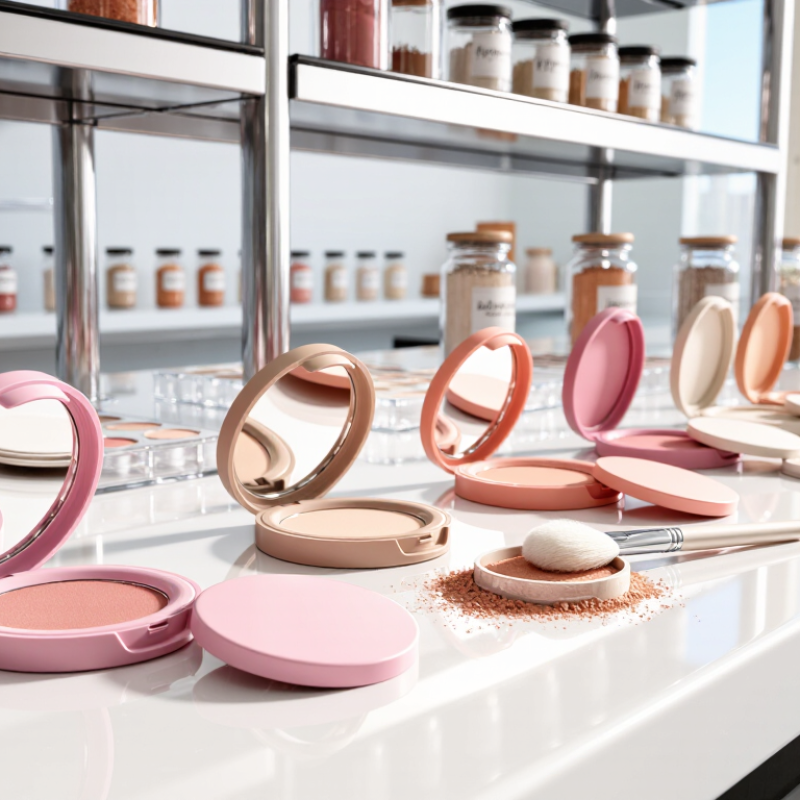
Chinese face powder suppliers typically offer pressed powder, loose setting powder, and powder foundation. Pressed formats suit quick touch-ups; compact pans and mirrors are common. Loose powders often come in sifter jars, with translucent or tinted options for setting makeup. Powder foundations provide more coverage, and suppliers may offer matte, satin, or luminous finishes.

Options vary by factory. Some suppliers develop oil-control, blurring, mineral-based, or talc-free formulas, but the names alone do not confirm performance or composition. Texture matters. McKinsey’s 2023 State of Beauty report estimated the global beauty market at about $430 billion in 2022, with annual growth of roughly 6% projected through 2027. This broad market figure is not specific to face powder, but it signals a competitive category where feel and finish matter. Ask for ingredient lists, shade cards, and samples before comparing quotations. Check how powders perform on different skin tones and in humid conditions; a shade can look quite different under store lighting. Small details count. Loose powder can spill during transit, while a pressed compact may crack if its pan or packaging is poorly tested.

Which Types of Face Powder Suppliers Operate in China?

China’s face powder suppliers generally fall into three groups: OEM factories, ODM manufacturers, and trading companies. OEM suppliers make a buyer’s specified formula and packaging. ODM teams can develop the formula, shade range, and compact design. Trading companies coordinate production and sourcing, but may not own a factory. Ask who controls formula changes and production records; the answer matters when you need repeatable batches.

China’s National Bureau of Statistics reported cosmetics retail sales of RMB 414.2 billion in 2023, up 5.1% year on year. This figure covers cosmetics broadly, not face powder alone, so it should not be treated as proof of powder demand. Some suppliers also specialize in loose powders, pressed powders, or mineral-style blends. Request sample pans, shade measurements, and batch-to-batch test records. A polished sample is not enough.

Tips: Ask for the factory address, minimum order quantity, lead time, and sample policy in writing. Compare powder texture on skin and in the compact; small differences can matter. One detail is easy to miss: packaging suppliers may be separate from the powder manufacturer.

What Are the Leading Face Powder Suppliers in China?

Leading face powder suppliers in China are best judged by what they can demonstrate, not by polished catalogs. Look for teams with experience in pressed, loose, and mineral-style powders, plus the ability to explain how texture, coverage, and skin feel change with different formulas. A useful sample test is simple: apply the powder over foundation, check it in daylight, and note whether it settles into fine lines after several hours. Small details matter. Ask how batches are checked for shade consistency, compact breakage, and particle texture. Request clear specifications and recent quality records, rather than relying on broad promises.

A capable supplier should also communicate openly about minimum order quantities, lead times, packaging options, and production changes. Ask for a sample made to your brief, then compare it with the approved reference during a follow-up order. Keep written records. This sounds basic, but details can drift. Factory visits or independent audits may help buyers assess equipment, cleanliness, and quality procedures, though neither guarantees a perfect product. It is also sensible to confirm that product documentation and labeling support your intended sales markets. No supplier is ideal for every project; a smaller manufacturer may offer flexibility, while a larger operation may handle repeat volumes more steadily. The best fit is the one that answers specific questions with evidence and flags limitations before production begins.

What Are the Best Face Powder Suppliers in China? - What Are the Leading Face Powder Suppliers in China?
Evaluation Dimension What a Strong Supplier Should Offer Evidence to Request Why It Matters
Product range Experience with relevant formats, such as pressed powder, loose powder, setting powder, or powder foundation. Current product catalogue, sample options, and a clear description of available formulations. Different formats can require different formulation, filling, and packaging processes.
Customization capability A defined process for shade matching, formula adjustment, fragrance options, and packaging customization, where available. Written development steps, sample approval records, and confirmation of which changes require new testing. Clear approval steps help reduce differences between approved samples and production batches.
Quality management Documented procedures for incoming materials, production checks, finished-product release, and complaint handling. Quality-system documents, sample batch records, inspection criteria, and relevant audit information. Documented controls make product consistency and issue investigation easier to assess.
Manufacturing practices Production practices appropriate to cosmetics, with controlled handling, cleaning, and batch traceability. Facility information, manufacturing procedures, traceability examples, and any applicable audit reports. ISO 22716 provides guidelines for good manufacturing practices for cosmetics; ask what controls are implemented and how they are verified.
Ingredient and product documentation Documentation appropriate to the product and intended market, including ingredient information and available safety or testing records. Ingredient list, specifications, applicable test reports, and written confirmation of document availability for the target market. Documentation needs vary by destination, product type, and claims; confirm requirements before placing an order.
Regulatory readiness Ability to explain what support is available for applicable product registration, filing, labeling, and market-specific requirements. A written responsibility matrix identifying which documents and regulatory steps are handled by the supplier and which are handled by the buyer or local representative. Cosmetics requirements differ across markets. Confirm current requirements with the relevant authority or a qualified regulatory professional.
Sampling and testing A practical sample-review process and clear testing options suited to the product and packaging. Sample lead-time estimate, test scope, acceptance criteria, and confirmation that approved specifications will be used for production. Testing and documented acceptance criteria help evaluate texture, shade, packaging fit, and product performance.
Order and delivery terms Transparent quotations covering minimum order quantity, lead time, payment terms, packaging, and shipping responsibilities. A dated quotation, production schedule, packaging specification, and written terms for delays or changes. Comparing like-for-like terms helps buyers assess total cost and delivery expectations.
Communication and traceability A consistent contact process, timely written updates, and the ability to trace products by batch or lot. Named points of contact, example production updates, and sample batch or lot identification records. Reliable communication and traceability support coordination and follow-up if an issue arises.

Note: This table is a supplier-evaluation checklist, not a verified ranking of individual manufacturers. Confirm all claims, documents, and applicable regulatory requirements directly before purchase.

How Can Buyers Compare Supplier Quality and Capabilities?

To compare Chinese face powder suppliers, look beyond catalog photos and quoted prices. McKinsey’s 2023 beauty report estimated that the global beauty market could reach $580 billion by 2027, with annual growth of about 6%. That figure signals demand, not manufacturing quality. Keep the distinction clear. Ask each supplier for its ISO 22716 documentation, audit scope, and recent production records. Verify certificate dates and issuing bodies rather than relying on a logo in a sales deck. A polished presentation can still hide weak change control.

Powders need practical testing. Request samples from a defined batch, then check shade consistency, payoff, compact strength, and dust during use. Leave samples in warm and humid conditions, and record any caking or color shift. Ask for batch-specific certificates of analysis and relevant microbiological and contaminant test results; confirm the methods and laboratory behind them. Compare minimum order quantities, lead times, and monthly capacity against written production schedules. Ask how rejected batches are investigated, too. I would not rank suppliers by certificates alone; that shortcut can miss the difference between paperwork and repeatable performance. A small pilot order may reveal more than a long capabilities brochure.

What Are the Best Face Powder Suppliers in China?

A practical framework for comparing supplier quality and capabilities

Suggested buyer-defined evaluation weights, not market-survey results or ratings of specific suppliers. Review quality systems and batch records, regulatory and safety documentation, formulation and testing capabilities, production capacity, and traceability. Adjust the weights to match your product requirements and destination market.

What Should Buyers Verify Before Placing an Order?

Before placing an order, verify the supplier’s business details and manufacturing arrangements. Ask whether production happens in-house or through a third party. Request a recent factory audit report, if available, and clarify who handles quality checks. A polished catalog is not proof of consistent production.

Review the powder’s ingredient list, product specifications, and batch documents. Request a sample from a current production batch, not only a specially prepared sales sample. Check texture, coverage, scent, shade consistency, and how the powder sits on skin. Small details matter. Ask for relevant test reports, such as stability and microbiological results, and confirm that documents match the product being quoted. Requirements can vary by destination market, so have a qualified local professional review applicable documentation.

Put the order details in writing: formula, shade range, packaging, quantity, production lead time, and acceptable tolerances. Confirm minimum order quantities, payment milestones, sample approval procedures, and what happens if a batch fails agreed specifications. Ask how the supplier tracks lots and handles complaints. A checklist helps, but it cannot replace a careful sample review; even experienced buyers can miss differences between samples and full production.

FAQS

What types of face powder suppliers operate in China?

OEM factories make products to a buyer’s formula and packaging brief. ODM manufacturers can develop formulas, shades, and compact designs. Trading companies coordinate sourcing and production but may not own a factory.

How can I assess whether a supplier fits my project?

Ask about powder types, texture options, minimum order quantities, lead times, and sample policies. Request clear specifications and recent quality records. Broad promises are not enough.

What should I check when testing a powder sample?

Apply it over foundation, then check the finish in daylight. Note the shade, coverage, texture, and how it settles into fine lines after several hours. Small details matter.

How can I check consistency between samples and production batches?

Ask how the supplier checks shade, particle texture, and compact breakage. Compare a current production sample with the approved reference. I would not trust a smooth first impression alone.

Which documents should I request before ordering?

Review the ingredient list, product specifications, and batch records. Request relevant stability and microbiological test reports, and confirm they match the quoted product. Requirements vary by market.

What details should the purchase agreement include?

Record the formula, shades, packaging, quantity, lead time, and acceptable tolerances. Confirm payment milestones, sample approval steps, and how the supplier handles batches that miss agreed specifications. Keep records.

Can a factory audit guarantee product quality?

No. An audit or factory visit can help you review equipment, cleanliness, and quality procedures, but it cannot guarantee a perfect product.

Should I confirm who supplies the packaging?

Yes. The packaging supplier may be separate from the powder manufacturer. Ask who controls formula changes, production records, and lot tracking. That detail is easy to miss.

Conclusion

China’s face powder market includes a wide range of products, from loose and pressed powders to translucent, oil-control, and finishing formulas designed for different skin types and makeup needs. Buyers can work with manufacturers, private-label producers, trading companies, or wholesalers, depending on their order volume, customization requirements, and sourcing preferences. Each supplier type offers different advantages in product development, production capacity, and purchasing flexibility.

When comparing suppliers, assess product consistency, ingredient and quality documentation, manufacturing capabilities, customization options, minimum order quantities, lead times, and communication practices. Before placing an order, request samples and confirm specifications, packaging details, pricing, payment terms, and quality-control procedures in writing. Careful evaluation helps buyers identify a dependable supplier and choose Face Powder products that meet their market requirements.

Oliver

Oliver

Oliver is a professional marketing specialist with a strong understanding of the company’s products, their features, and the needs they are designed to serve. He works closely with product and customer-facing teams to turn technical information into clear, useful guidance for readers. Through......