In 2026, Setting Powder comes in more forms than a loose jar or a compact. The right type depends on your skin, preferred finish, and how you wear makeup day to day. A powder that softens shine on one person may emphasize dry patches on another. Small details matter.
This guide compares the main options: loose, pressed, translucent, tinted, and mineral powders. Loose formulas can feel weightless and suit all-over setting, while pressed powders offer less mess for touch-ups. Translucent versions aim to set makeup without adding much visible color; tinted formulas can provide light coverage. Mineral powders may appeal to shoppers seeking a shorter ingredient list, but ingredients and performance vary by product. Less is more.
We’ll look at texture, coverage, finish, application, and practical trade-offs, including how powder can appear in daylight or settle around fine lines. A soft brush gives a sheer veil; a damp sponge usually places more product in a smaller area. Neither method is perfect. The comparison is not absolute, and product claims alone cannot predict how a formula will wear on your skin. Check the label, patch-test if you are sensitive, and consider testing in natural light. The goal is not to find one universal winner, but to understand which powder type fits your routine—and where it may fall short.
What Setting Powder Is and How It Works
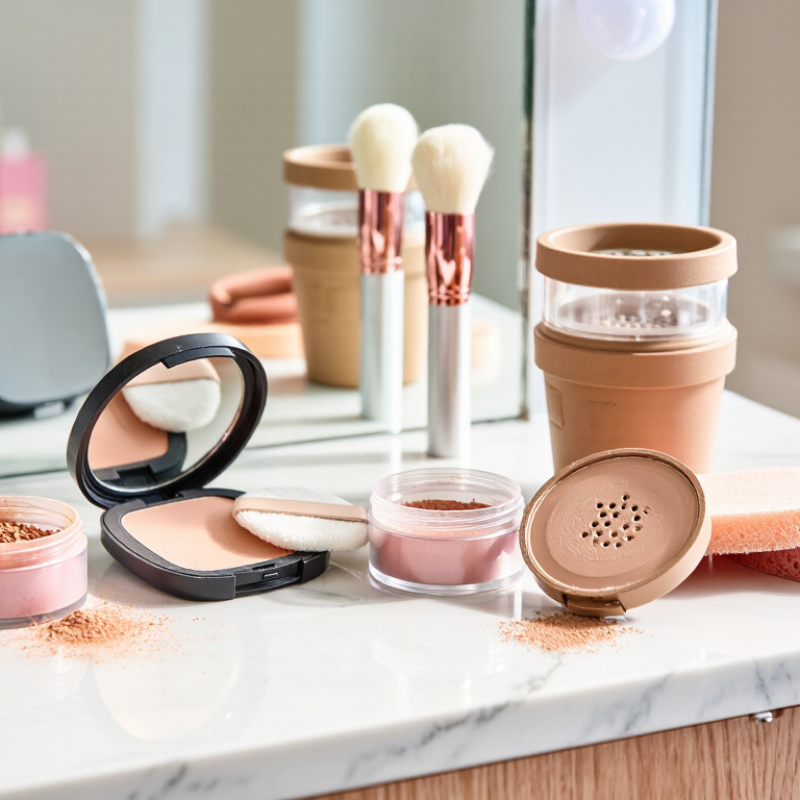
In 2026, setting powder is a finely milled or pressed cosmetic applied over foundation, concealer, or bare skin. Its particles help absorb surface oil, reduce tackiness, and soften shine. Loose powders are easy to diffuse across larger areas; pressed powders offer more controlled touch-ups. Neither type forms an invisible, permanent seal. Wear still depends on skin oil, humidity, application, and the products underneath.
The mechanism is simple: a light veil of powder settles on the skin and helps liquid or cream makeup feel less slippery. Ingredients such as silica, starches, and mineral powders can absorb oil or scatter light, though formulas differ. Grand View Research valued the global makeup market at $40.49 billion in 2023. It projected 5.4% annual growth from 2024 to 2030. That figure covers makeup overall, not setting powder alone. That distinction matters. Too much powder can emphasize dry patches or fine texture, especially around the nose and under the eyes. Apply a small amount, then check the finish in daylight. Powder may extend makeup wear, but it cannot prevent every crease or shine. Real skin is less predictable than a product description suggests.
The Main Types of Setting Powder Available in 2026
The main setting-powder types in 2026 differ by form, finish, and skin feel. Loose powder is finely milled and suits light, targeted setting with a fluffy brush. Pressed powder travels well and makes touch-ups easier. Use a little. Applying several layers can make concealer look dry or thick.
Translucent and tinted describe shade, not powder format. Translucent versions add little color, but some may leave a pale cast on deeper skin, especially in flash photography. Tinted powders offer light coverage, though matching the shade can take testing. Mineral powders describe ingredients and can be loose or pressed; “mineral” does not guarantee a gentler formula for everyone. No type is foolproof. Circana reported that U.S. prestige makeup sales reached $7.5 billion in 2024, up 5% from the previous year. That figure covers makeup overall, not setting powder alone. For oily areas, press a small amount around the nose and forehead, then brush away excess. On dry or textured skin, try less powder and check for settling in daylight.
How Each Powder Type Differs in Finish and Performance
Loose setting powder usually gives the lightest, most adjustable finish. Its fine texture can soften shine across the T-zone without adding much visible coverage. Translucent versions suit many looks, though they may appear pale if applied heavily or poorly matched to the skin. Use a small, fluffy brush for a sheer veil. Less can be enough.
Pressed powder is portable and easier to control for touch-ups. It often gives more coverage than loose powder, especially when applied with a puff. The finish can range from natural to matte, depending on the formula and amount used. Too much may gather around dry patches or emphasize texture. Check in daylight.
Tinted powder adds a little color, which can help even out the look of a base and reduce the ashy cast some translucent powders leave on deeper skin tones. Mineral powders may feel light, but their coverage and texture vary; “mineral” alone does not guarantee a better match or smoother wear. Skin prep matters. Powder can cling to flaky areas, while oily zones may need a light reapplication later. There is no perfect type for every face, and choosing by finish alone can be misleading. Observe how it sits after a few hours.
What Are the Top Setting Powder Types in 2026?
How each powder type differs in finish and performance
Scores show typical relative tendencies on a 1–5 scale, not standardized laboratory measurements. Loose translucent powders are often chosen for oil control, pressed powders for portability, tinted powders for added coverage, mineral powders for a more skin-like finish, and finishing powders for a soft-focus effect. Formulas vary, so results depend on the specific product and skin type.
Which Skin Types and Makeup Needs Suit Each Powder
What Are the Top Setting Powder Types in 2026?
Which Skin Types and Makeup Needs Suit Each Powder
Loose translucent powder suits oily and combination skin, especially where shine gathers around the nose and forehead. Press a small amount onto those areas, then sweep away excess with a soft brush. Less is safer. For dry skin, use powder only where makeup creases; a full-face layer can catch on flaky patches. Pressed powder is practical for touch-ups and usually easier to control on the go, though repeated layers may look heavy.
Tinted powders can soften mild redness or uneven tone, but they need a close shade match and cannot replace targeted skincare. A blurring finishing powder may soften the look of pores in photos, yet fine lines can become more noticeable if the formula is too dry. The American Academy of Dermatology estimates that acne affects up to 50 million people in the United States each year; acne-prone users can look for “non-comedogenic” makeup, while remembering that the label does not guarantee zero irritation. Circana reported U.S. prestige makeup sales grew 5% in 2024, a broader category measure rather than powder-specific demand. Test in daylight. Powder choices are personal, and even good advice can miss how a formula wears on your skin.
How to Choose and Apply the Right Setting Powder
Choosing setting powder starts with your skin’s needs and the finish you want. Circana reported that U.S. prestige makeup sales reached $9.6 billion in 2024, up 5% from 2023. That figure covers makeup broadly, not setting powder alone, but it reflects a busy category where products serve different routines. Loose powder is useful for light, targeted setting; pressed powder travels well and allows quick touch-ups. Translucent formulas minimize added color, while tinted powders can even out the look of the complexion. If your skin feels dry, test a small amount first. A powder that looks smooth in the store may emphasize flakes at home.
Use a clean, fluffy brush for a sheer layer, or a small puff to press powder onto areas that crease or become shiny. Tap off excess before touching your face. Less is usually better. Check in daylight. Apply over fully settled base makeup, then wait a moment before adding more; piling on powder can make texture more visible. For a natural finish, focus on the sides of the nose, center of the forehead, and chin, leaving drier areas mostly untouched. A common blind spot is choosing by shade alone: undertone, particle feel, and the amount applied also change the result. Even careful matching can disappoint under different lighting, so test near a window before wearing it for a full day.
What Are the Top Setting Powder Types in 2026? — How to Choose and Apply the Right Setting Powder
| Powder Type |
Typical Finish and Coverage |
Often Suits |
How to Choose |
Application Tips |
| Loose translucent powder |
Usually sheer, with a soft-matte or natural finish. It is intended to set makeup without adding much visible color. |
People who want to reduce shine or set liquid and cream makeup while keeping its shade largely unchanged. |
Check that the powder looks clear or suitably sheer on your skin tone. Very dry skin may prefer a small amount rather than an all-over layer. |
Tap excess powder from a fluffy brush, then press or sweep a light layer over areas that crease or become shiny. Avoid loading powder onto dry patches. |
| Loose tinted powder |
Adds a small amount of color; coverage and finish vary by formula, from sheer to lightly evening. |
People who want a little extra tone-evening or prefer a powder shade that blends with their complexion. |
Test the shade in natural light and check it against the face and neck. Tinted powder can alter the appearance of foundation if the shades do not match. |
Apply sparingly with a brush, especially over foundation. Build in thin layers instead of applying a heavy coat at once. |
| Pressed setting powder |
A compact format; may be translucent or tinted and can range from sheer to more noticeable coverage. |
People who want a portable option for touch-ups or prefer a less messy format than loose powder. |
Choose a shade and finish that work with your base makeup. Consider the compact’s coverage if you plan to reapply during the day. |
Use a clean puff or brush and pick up a small amount. Press lightly onto shiny areas; use a brush for a softer, more diffused layer. |
| Mineral powder |
Often sold as loose or pressed powder; may be tinted and may provide sheer to fuller coverage, depending on the product. |
People seeking a powder base or a setting product with a more noticeable makeup effect. Skin response depends on the full ingredient list. |
Review the ingredients and shade range rather than assuming every mineral formula is suitable for every skin type. Check whether it is designed to set makeup or serve as foundation. |
For a setting layer, use a small amount over makeup. If used as a powder foundation, follow the product directions and build coverage gradually. |
| Color-correcting powder |
Contains a subtle tint intended to visually balance certain areas; usually provides light coverage, though formulas differ. |
People looking to soften the appearance of specific areas of uneven tone without applying a strongly colored layer. |
Select a correcting shade for the area and concern, and use a formula whose tint is subtle enough to blend with your complexion. |
Apply lightly and only where needed, using a small brush. Check the result in natural light to avoid a visible color cast. |
FAQS
Loose powder gives a light, adjustable veil. Pressed powder travels easily and can add more coverage, especially with a puff.
Use a small, fluffy brush and apply a thin layer. Translucent powder can look pale when applied heavily or poorly matched. Less can be enough.
Pressed powder is compact and easy to control on the go. Tap off extra powder before touching up your forehead or nose.
It adds a little color and may reduce an ashy cast. Test the shade and undertone in daylight before wearing it all day.
No. Coverage and texture vary, and “mineral” alone does not guarantee a good match. Skin prep matters.
Start with a small amount, or leave those areas mostly untouched. Powder can cling to flakes and make them more visible.
Focus on the sides of your nose, the center of your forehead, and your chin. Keep drier areas mostly bare.
Skin may become shiny, or powder may settle around dry patches. Check near a window and observe how it wears. I still sometimes apply too much.
Conclusion
Setting Powder is a finishing product that helps makeup stay in place by absorbing excess oil, reducing tackiness, and softening the appearance of shine. In 2026, common options include loose and pressed powders, translucent and tinted formulas, and powders designed for a matte, natural, or softly radiant finish. Each type offers different coverage, texture, and staying power, so the best choice depends on the desired look as well as how the product feels on the skin.
Oily skin may benefit from a lightweight mattifying powder, while dry or mature skin often does better with a finely milled formula that avoids emphasizing flaky areas or lines. Tinted powders can add subtle coverage, whereas translucent options set makeup with little added color. To choose well, consider skin type, makeup needs, and preferred finish. Apply a small amount with a brush or puff, focusing on areas that crease or become shiny, and build gradually for a smooth, comfortable result.