Under Eye Concealer Manufacturing Whitepaper: Engineering performance, Skinification, and Supply Chain Optimization
The global market for targeted color correctors and custom under-eye concealers has evolved rapidly from simple masking pigments into complex, high-performance hybrid formulations. Today’s consumer demands high pigment density to disguise dark circles, hyperpigmentation, and vascular discoloration, alongside lightweight, crease-resistant, skinifying properties that actively hydrate delicate periorbital tissue. For brand procurement directors, sourcing teams, and beauty entrepreneurs, selecting the right custom OEM under eye concealer factories & exporters is a critical operational decision that directly impacts brand equity, regulatory safety, and customer retention.
1. Advanced Rheology Engineering & Emulsion Architectures
Professional OEM cosmetics manufacturers utilize specific emulsion bases depending on the target performance metrics specified by the private label client:
- Water-in-Silicone (W/Si) Emulsions: The gold standard for ultra-smooth, transfer-proof under-eye concealers. Volatile siloxanes (such as Cyclopentasiloxane or Isododecane) provide rapid evaporation, leaving a uniform matrix of pigment stabilized by dimethicone crosspolymers. This delivers long-wear, waterproof performance without causing a heavy feeling.
- Water-in-Oil (W/O) Active Enriched Systems: Ideal for hydrating, "clean beauty" formulations targeting mature skin. These emulsions lock in moisture by forming an occlusive micro-barrier, allowing high concentrations of water-soluble actives like Hyaluronic Acid, Niacinamide, and Haloxyl™ peptides to continuously penetrate the stratum corneum.
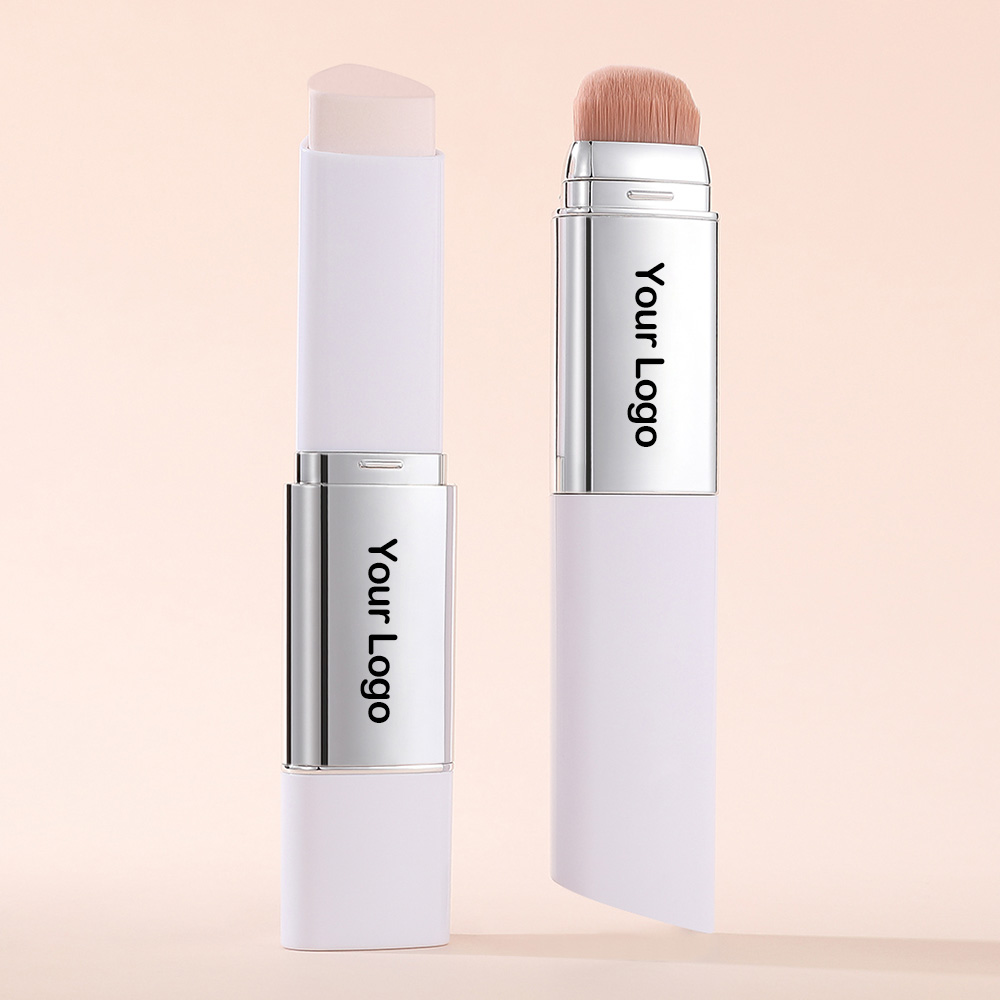
- Anhydrous Stick Formulations: Formulated using lightweight esters, synthetic waxes, and microcrystalline structures for stick concealers equipped with dual-ended brushes or cooling metal applicators.
2. Pigment Dispersion & Light-Diffusing Spherical Technologies
Standard coarse iron oxides tend to settle into fine lines under the eyes and accentuate dry patches. Superior B2B OEM concealer exporters employ micronized, surface-treated pigments (Triethoxycaprylylsilane or Amino Acid-treated iron oxides). Surface treatment renders the pigment particles hydrophobic and lipophilic, allowing seamless dispersion in the oil phase and delivering maximum opacity at lower pigment loads.
Furthermore, to solve the issue of cakey coverage, modern R&D incorporates optical light-diffusing powders such as Boron Nitride, Silica Spheres, and Polymethylsilsesquioxane (PMSQ). These spherical micro-beads scatter ambient light in multiple directions, creating a soft-focus "blurring" effect that optically minimizes dark circles and hollow under-eye contours without accumulating heavy powder buildup.
3. Skinification: Incorporating High-Potency Dermo-Actives
Modern consumers expect their concealer to function as an active eye treatment. Contract manufacturing facilities must possess the technological capabilities to incorporate temperature-sensitive active ingredients without compromising emulsion integrity or active bioavailability:
- Micro-Encapsulated Caffeine: Stimulates microcirculation to shrink dilated capillaries and diminish blue/purple vascular discoloration beneath the eyes.
- Peptide Complexes (Palmitoyl Tripeptide-1, Palmitoyl Tetrapeptide-7): Reinforce collagen synthesis to thicken thin periorbital skin over extended use.
- Niacinamide (Vitamin B3): Suppresses melanosome transfer to lighten hyperpigmented brown under-eye rings.
- High and Low Molecular Weight Sodium Hyaluronate: Provides immediate surface plumping alongside multi-depth epidermal hydration.